 2026 RPS Engineering
On this page:
- Why cover clarifiers — odor, algae, debris, and safety
- Why cover digesters — biogas, odor, and safety
- Beyond clarifiers and digesters — aeration tanks, wet wells, and more
- Which cover fits which tank
- Frequently asked questions
Why Wastewater Treatment Plants Cover Clarifiers
Odor and hydrogen sulfide control
Primary clarifiers can turn septic when wastewater or settled sludge sits too long, producing hydrogen sulfide and other odorous compounds. EPA identifies primary clarifiers as a potential odor source at treatment plants. A cover contains those gases and lets the plant draw the headspace air to a scrubber, carbon system, or biofilter instead of releasing it into the surrounding neighborhood.
Algae prevention on weirs and launders
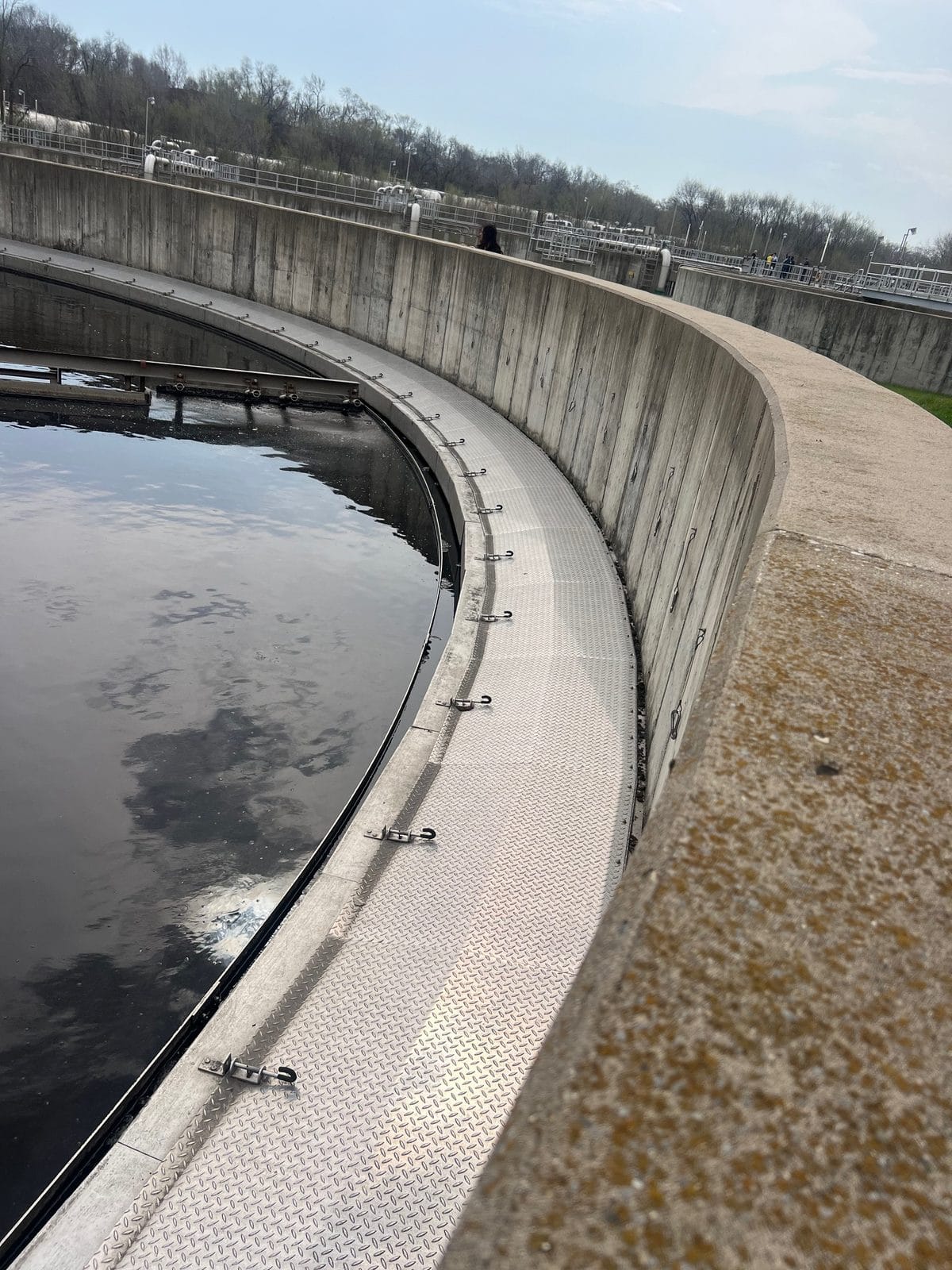
Algae is one of the most common reasons plants cover clarifiers, including secondary clarifiers that aren’t significant odor sources. Clarifier launders sit in direct sunlight and carry nutrient-rich effluent, which is ideal for algae growth on weirs, scum baffles, and launder walls. Algae restricts flow over the weir, adds total suspended solids (TSS) to the effluent, clogs downstream filters, and fouls UV disinfection equipment. Covers that block sunlight stop algae from establishing in the first place.
Debris, wildlife, and weather
Open clarifiers collect windblown leaves and debris that affect process performance, and they attract ducks, geese, and other wildlife. Covers keep both out and protect the tank and its equipment from snow, ice, and freezing.
Worker safety
Covers reduce operator exposure to H₂S and lower the risk of falling into the tank for staff working near primary clarifiers.
Why Wastewater Treatment Plants Cover Digesters
Biogas containment
Anaerobic digestion breaks down sludge without oxygen and produces biogas, which is mainly methane and carbon dioxide with smaller amounts of hydrogen sulfide (see EPA’s anaerobic digestion FAQ). A digester cover contains that gas so it can be safely collected and used for heating, boilers, or power generation, rather than escaping into the atmosphere.
Digesters are standard equipment at larger plants: a September 2026 survey by the American Biogas Council found that 1,213 U.S. water resource recovery facilities operate anaerobic digesters, including more than three-quarters of plants treating over 30 MGD (American Biogas Council, 2026).
Odor control and the anaerobic environment
Digester covers keep H₂S and other sludge odors contained and maintain the oxygen-free conditions digestion depends on. For this reason, digester covers are typically gas-tight, with minimal access openings and continuous perimeter seals.
Safety
Methane is flammable and H₂S is hazardous to breathe. A properly sealed digester cover is part of the plant’s gas-management and safety system.
Beyond Clarifiers and Digesters
Plants also cover aeration tanks, equalization basins, wet wells, headworks, and sludge holding tanks. Covered aeration tanks retain heat, which reduces the energy needed to maintain biological process temperatures in cold weather. Air quality permits, NPDES conditions, and state odor rules increasingly require covers on open process basins.
How Plants Cover Clarifiers and Digesters: Which Cover Fits Which Tank?
| Tank | Common cover type | Main reason to cover |
|---|---|---|
| Primary clarifier | Aluminum geodesic dome or flat cover | Odor and H₂S control, worker safety |
| Secondary clarifier | Launder and channel covers or full dome | Algae prevention on weirs and launders, debris |
| Anaerobic digester | Gas-tight flat cover or dome; FRP for high H₂S | Biogas containment, odor control, safety |
| Thickener | Aluminum geodesic dome or flat cover | Odor control |
| Aeration tank | Flat aluminum plank cover | Odor control, heat retention |
Frequently Asked Questions
Do secondary clarifiers need covers?
Secondary clarifiers usually aren’t major odor sources when the upstream biological process is working properly, but many plants still cover them to prevent algae. Algae on secondary clarifier weirs and launders raises effluent TSS, clogs filters, and interferes with UV disinfection, so launder covers are a common solution.
Do clarifier covers prevent algae?
Yes. Solid covers that block sunlight prevent algae from growing on weirs, launders, and baffles. RPS Engineering launder covers are sealed with overlapping panels and gaskets specifically to keep sunlight out.
What is the difference between a clarifier cover and a digester cover?
A clarifier cover is mainly an odor, algae, and debris control measure, and it is often vented to an odor control system. A digester cover is part of the biogas system: it must be gas-tight to contain methane and maintain anaerobic conditions, so it uses continuous perimeter seals and minimal access openings.
What cover material is best for high H₂S environments?
Fiberglass reinforced plastic (FRP) offers superior resistance to hydrogen sulfide and aggressive chemical environments, which makes it the preferred choice for high-H₂S digesters, odor hoods, and pump stations. Aluminum is typically preferred for large spans, such as clarifier domes. See Aluminum vs. Fiberglass Tank Covers: How to Choose.
Wastewater Tank Covers from RPS Engineering
RPS Engineering has designed and fabricated wastewater tank covers since 1975, including aluminum geodesic domes spanning up to 180 feet, FRP domes, flat aluminum covers, and launder and channel covers. Every cover is field-measured and custom-built to the tank.